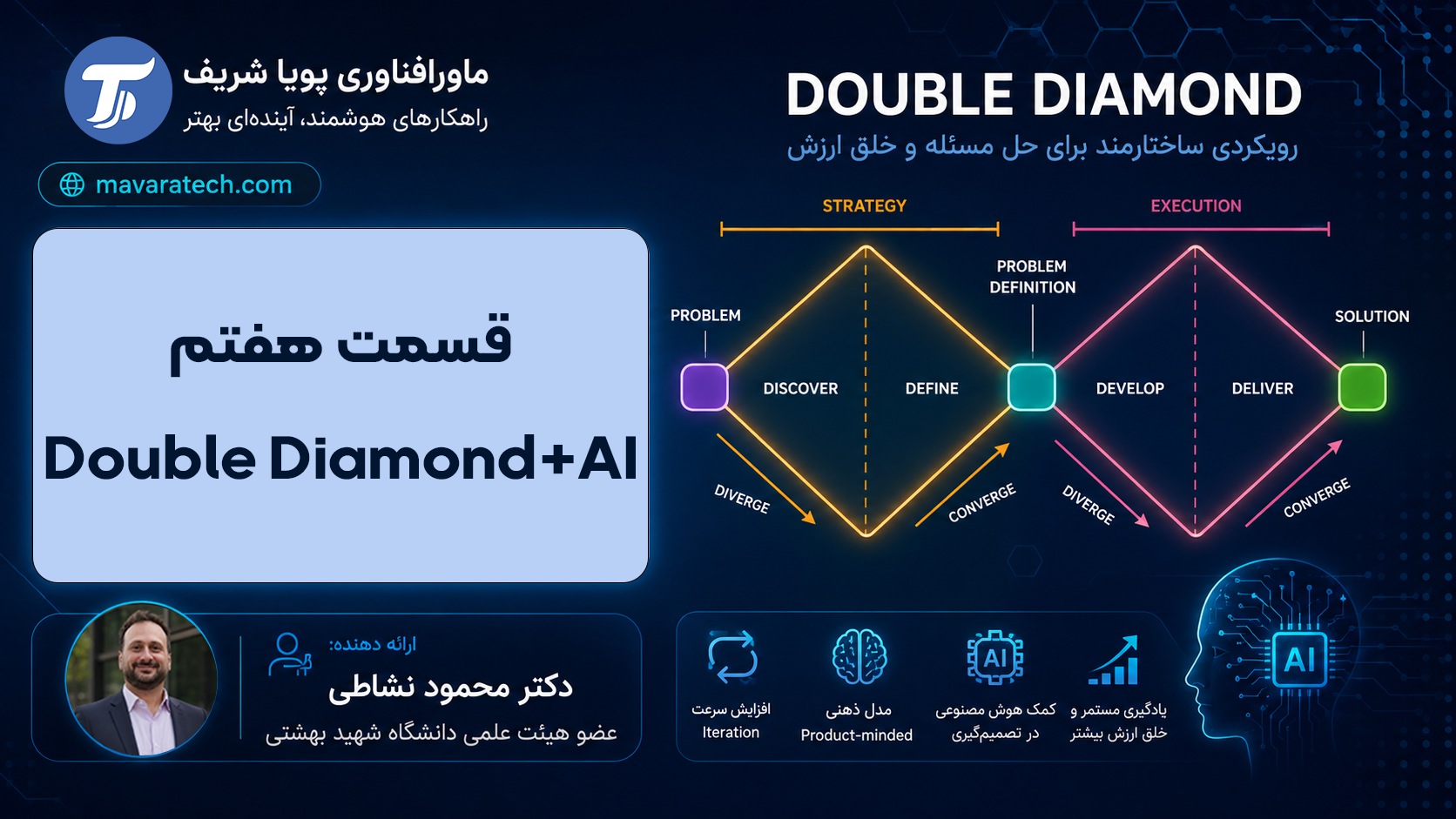
Double Diamond Summary: From Understanding the Problem to Measuring Real Outcomes
In this final part, we review the four stages of the Double Diamond framework and explore a mental model for the Product-Minded Software Engineer.
The Four Stages of Double Diamond
The Double Diamond framework consists of four main stages:
Discover: Discover the problem
Define: Define the problem
Develop: Explore and develop solutions
Deliver: Build and deliver the solution, then measure and learn
However, the true value of Double Diamond lies not just in these four stages, but in how we move between two distinct spaces.
The Problem Space and the Solution Space
The Double Diamond model consists of two main spaces:
Problem Space: Are we solving the right problem?
Solution Space: Are we solving the problem we have chosen in the right way?
In both spaces, the process involves divergent and convergent thinking. We first expand our perspective, explore evidence and alternatives, and then consciously narrow our focus to a specific direction.
This approach helps us avoid making decisions too early.
From Traditional Software Engineering to Product Thinking
In a traditional software development process, we might receive requirements from a customer, analyze them, write code, test the implementation, and finally deploy the solution.
In a Product Thinking approach, the process is broader. We start by understanding the problem, gathering evidence, forming hypotheses, exploring potential solutions, running experiments, building an MVP, delivering the solution, and continuously measuring outcomes and learning from the results.
This cycle is iterative and repeats as new insights emerge.
The Role of AI in the Learning Cycle
AI can support different stages of this cycle, from gathering evidence and developing hypotheses to building MVPs and learning from user behavior.
However, the key point is that the goal of Product Thinking is not simply to build things faster.
If AI helps us produce outputs more quickly without improving our learning, we have only increased the speed of production.
The greater value of AI lies in accelerating iterations, enabling faster feedback, and ultimately speeding up the learning process.
The Product-Minded Engineer's Mental Model
When a software engineer is asked to develop a feature, the question should not simply be, "How do I build it?"
More important questions include:
Why do we need this feature?
What problem are we trying to solve?
What evidence do we have that this problem exists?
Which users are experiencing this problem?
What outcome are we trying to achieve?
What possible solutions do we have?
How can we experiment with these options?
How will we measure success?
This mindset expands the software engineer's role from merely implementing solutions to actively participating in problem discovery and solution validation.
Iterations Matter More Than Hours
One of the key ideas discussed in this part is that the number of iterations plays a significant role in developing expertise.
A single cycle might involve understanding a feature, implementing it, experiencing failure, learning from the outcome, making improvements, and repeating the process.
The faster we repeat this cycle, the more opportunities we create for learning.
AI can shorten this cycle by enabling faster output generation, quicker experimentation, and earlier feedback.
Therefore, from this perspective, the main advantage of AI is not just production speed, but its ability to accelerate the learning loop.
Five Key Takeaways from Double Diamond
1. Start with the Problem, Not the Solution
Sometimes, we already have a solution or feature in mind and try to find a problem that justifies it.
The Double Diamond approach encourages us to reverse this process and start with the problem.
2. Define the Problem Based on Evidence
During the Discover and Define stages, we should rely on evidence, system logs, and customer behavior to understand and define the problem more accurately, rather than depending solely on people's opinions.
3. Explore Multiple Options During Develop
Before selecting a solution, we should expand the solution space and consider different alternatives.
4. Build and Gather Feedback During Deliver
After selecting a solution, we focus on implementing it and bringing it into the real world so that we can collect meaningful feedback.
5. Measure Real Outcomes
Ultimately, we need to determine what impact the solution has actually created and use those insights to guide the next iteration.
Final Thoughts
The Double Diamond framework helps us move beyond simply building things faster. It encourages us to first understand the right problem, explore better solutions, and ultimately measure real outcomes.
Combined with AI, this framework can make the cycle of experimentation, feedback, and learning faster, more efficient, and more repeatable.