Choosing an enterprise integration platform is usually a long-term decision. It sits at the center of communication among an organization’s systems, services, and APIs, and changing it later can be costly and complex. Therefore, when selecting such a product, the number of features or its international track record should not be the only criteria. The key question is how well the selected solution aligns with the organization’s real conditions in terms of security, scalability, and the ability to receive long-term support.
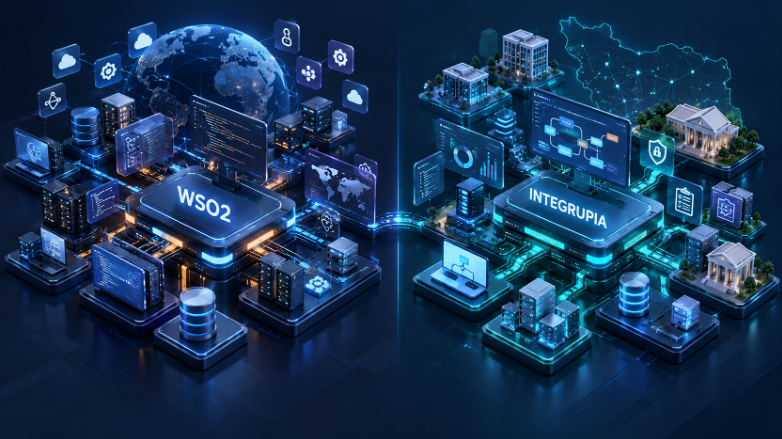
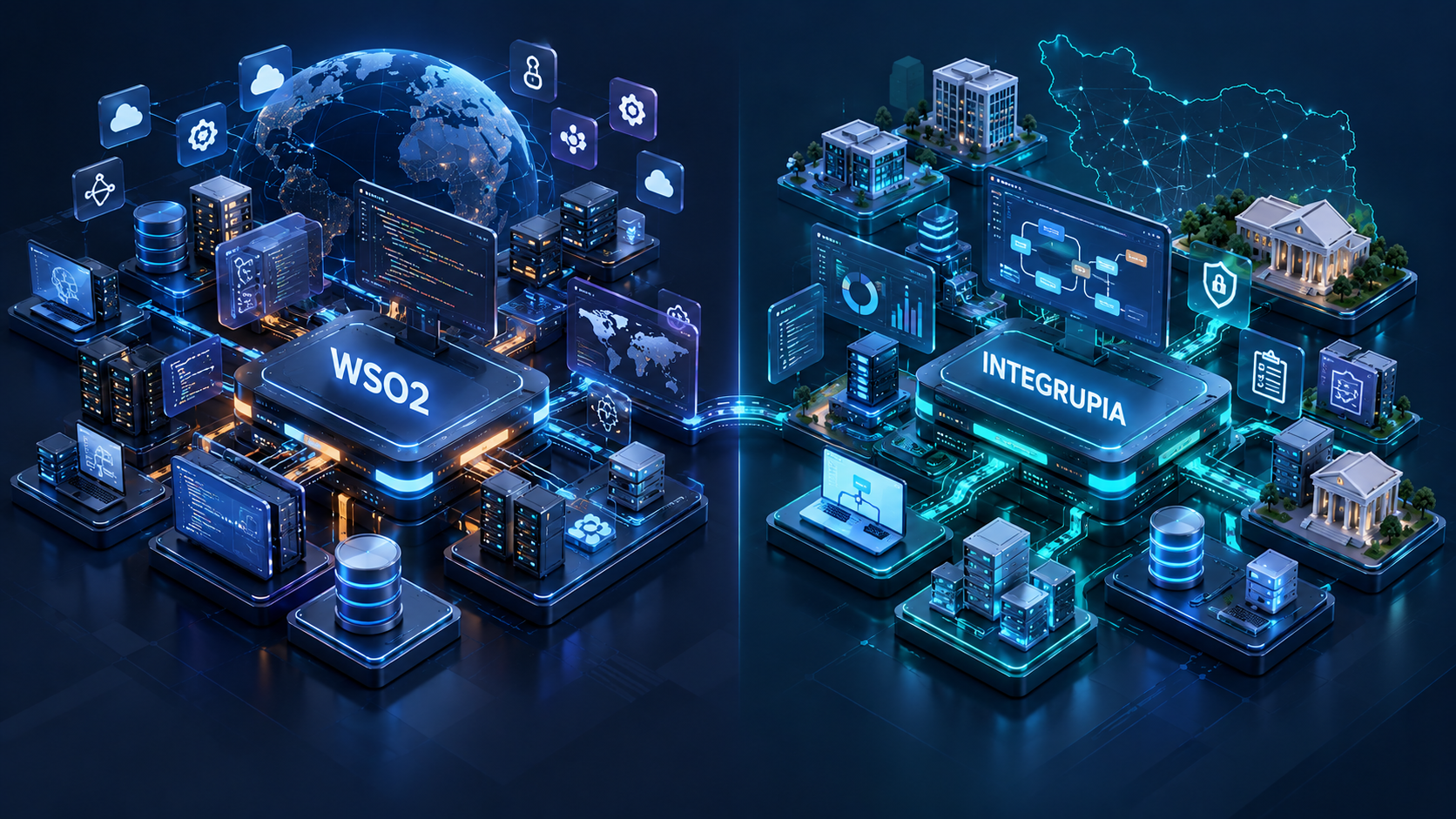
WSO2 is an established platform in the fields of Integration and API Management, offering broad technical capabilities to specialized teams. In contrast, Integropia is a locally developed platform focused on the needs of Iranian organizations, with a Low-Code, REST-First architecture and a combination of Integration and API Management.
Considering the specific conditions of Iranian organizations, Integropia is presented in the source document as a more suitable and lower-risk choice for an enterprise Integration platform.
1. Security and AFTA Compliance: An Important Advantage of Integropia
Security is not an optional feature in an Integration platform. The platform sits on the path of information exchange among different organizational systems; therefore, any weakness or limitation at this layer can affect other parts of the architecture.
According to the source document, Integropia holds an AFTA security certificate. This is directly relevant to many Iranian organizations, particularly those that are required to comply with formal security requirements.
The source document emphasizes that Integropia’s advantage in this area is not simply having a certificate. As a locally developed product, its development, support, and adaptation to the country’s IT environment and requirements are carried out domestically.
Accordingly, when security and domestic requirements are priorities, the source document identifies a specific advantage for Integropia compared with an international platform such as WSO2.
2. Connectivity to Domestic Services
One of WSO2’s capabilities is its broad ecosystem of connectors. This can be valuable for organizations that work with a diverse range of international services and products.
For an Iranian organization, however, an important criterion is how well the platform integrates with the actual domestic service ecosystem. The source document states that Integropia connects to GSB and PGSB and that more than 200 services have already been connected to it. Therefore, connectivity to governmental and domestic services is described not merely as a listed capability, but as something used in a real environment.
This creates an operational benefit for organizations whose interactions significantly involve domestic and governmental services: they can use a platform that has been shaped around this environment and has practical experience connecting to it.
Connectivity to REST and SOAP, integration with legacy systems, and the ability to transform, map, and standardize messages and data are core requirements of an enterprise Integration platform. Integropia provides these capabilities and enables communication between old and new systems. This allows an organization to move gradually from legacy architectures toward API-based architectures without having to discard existing systems.
3. Scalability: A Platform for Today’s and Tomorrow’s Needs
An Integration Platform may remain in an organization for many years. During that time, the number of systems, APIs, services, and digital channels can increase, while new technologies can enter the organization’s architecture. Scalability therefore means more than simply being able to add a new capability; it means enabling the organization to evolve the platform in line with its needs without unnecessary increases in complexity and cost.
Because WSO2 is open source and has a broad ecosystem, it offers significant technical flexibility. However, the source document notes that making effective use of this flexibility requires specialized teams and deep technical knowledge. As customization moves closer to the product’s fundamental components, maintenance, testing, and upgrade costs can also increase.
Integropia follows a different approach. The product is developed domestically, and its product team is close to the needs of Iranian organizations. As a result, new organizational requirements can be incorporated directly into the product’s development and evolution path.
Architecturally, Integropia is REST-First while also supporting SOAP. Organizations can therefore develop new services and APIs based on more modern architectures without discarding legacy systems. The source document presents this as particularly relevant for organizations that operate with both legacy systems and new services.
4. Low-Code: Faster Development and Lower Dependency
In large projects, the cost of Integration is not limited to creating new services. A significant portion of the cost comes from changing, maintaining, and modifying existing services. Integropia’s Low-Code approach enables a substantial part of routine changes and configurations to be performed with less dependence on coding. This can reduce change time and decrease organizational dependence on a limited number of highly specialized resources.
At enterprise scale, this can be significant: as the number of services grows, a development model in which every change requires deep technical expertise can become a bottleneck. The source document therefore describes Integropia’s benefit not simply as development capability, but as the ability to develop with lower operational complexity.
5. Analytics and Constraints Caused by Sanctions
Monitoring service status and analyzing performance are essential for managing a large Integration environment. Platforms in this field provide Monitoring and Analytics capabilities for observing service status and analyzing performance.
The source document states that WSO2 also provides Monitoring and Analytics capabilities, but identifies an important constraint in Iran: due to sanctions, the use of WSO2 Analytics widgets is not possible.
Consequently, the existence of a capability in a product’s feature list does not necessarily mean that an Iranian organization can use it in practice. Integropia, by contrast, provides Monitoring and Operational Intelligence capabilities within its platform, enabling organizations to observe and analyze service and operational status in their environment.
This distinction highlights the importance of differentiating between a product capability and a capability that can actually be used under an organization’s real operating conditions.
6. Long-Term Support
An Integration Platform is usually a multi-year investment. An organization needs confidence that it will continue to receive support, bug fixes, development, upgrades, and adaptation to new requirements in the years ahead.
For an international platform, factors such as sanctions, access limitations, dependence on specialized expertise, and difficulty interacting directly with the supplier can create long-term risks.
As a locally developed product, Integropia reduces these risks to a significant extent according to the source document. Product development, support, and evolution are carried out domestically, and the product team has direct familiarity with the needs and constraints of Iranian organizations.
This becomes more important when the platform is a significant part of the organization’s architecture, because stable access to the technical team and continuous support become part of business continuity requirements.
The Need to Integrate Integration and API Management
Today, Integration and API Management are increasingly interconnected. A service may initially be created to connect internal systems and later be exposed to an application, portal, or business partner.
Solutions such as Apigee also demonstrate the growing importance of API Management, where API publishing, security, usage control, and analytics are important. By providing Integration and API Management on one platform, Integropia can reduce the need for a chain of separate tools and enable more centralized management of services and APIs.
Key Capabilities and Advantages of Integropia
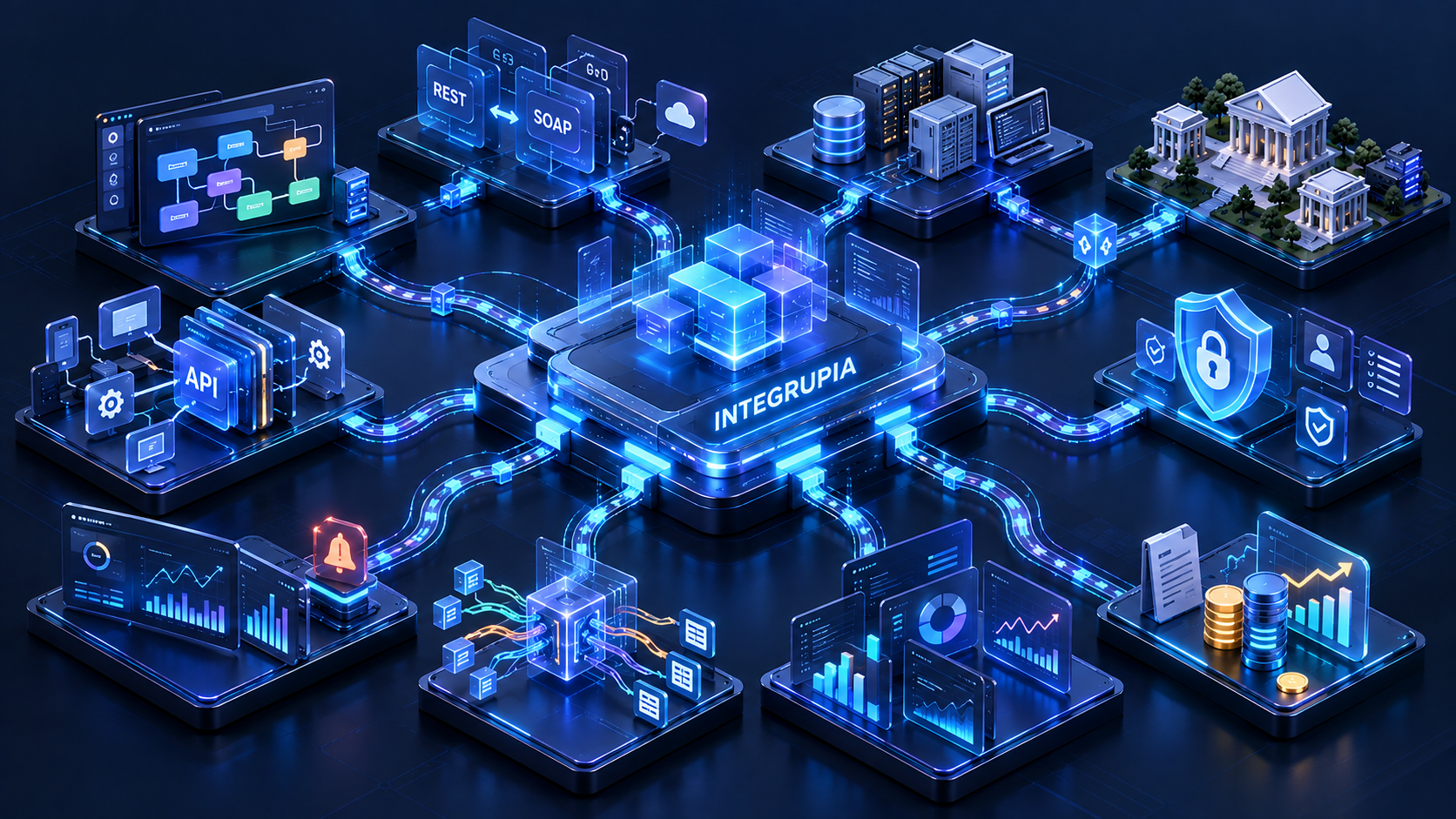
· Low-Code Integration: Design and configure integration services and flows with minimal coding.
· REST and SOAP Connectivity: Communicate with services based on common standards and exchange information between systems.
· Legacy System Connectivity: Integrate existing organizational systems with new services and systems without removing the existing infrastructure.
· Data Transformation and Mapping: Transform formats, map fields, and standardize messages for communication among different systems.
· API Management and Service Lifecycle Management: Create, publish, version, manage, and control services and APIs on a centralized platform.
· Access Management and Usage Policies: Define access levels and API usage policies for users, systems, and organizational units.
· GSB and PGSB Connectivity: Ready connectivity to GSB and PGSB, with experience connecting more than 200 services to the platform.
· Proactive Service Monitoring: Continuously monitor service status and performance to identify problems and disruptions quickly.
· Smart Alarms and Alerts: Identify failed or abnormal services and quickly notify relevant teams.
· Comprehensive OI and BI: Analyze operational service status alongside management and business reports and indicators.
· Billing and API Cost Management: Manage paid API costs and calculate and report costs generated by service consumption.
· Support for Organizational Development and Evolution: Develop and change services in line with new organizational needs while reducing the complexity of changes over time.
Conclusion
WSO2 is an established and capable platform and can serve organizations that have specialized technical teams, complex requirements, and broad interaction with the international ecosystem.
For Iranian organizations, however, the source document argues that the selection criteria should go beyond the number of features and connectors.
The document identifies three key areas for Integropia: security, scalability, and long-term support. It states that Integropia has an AFTA security certificate and is more aligned with domestic security requirements; that its REST-First architecture, legacy support, Low-Code approach, and ability to evolve with organizational needs can simplify future development; and that domestic development and support can reduce risks related to sanctions and restricted access to foreign services.
In addition, the document points to Integropia’s connection to GSB and PGSB and to more than 200 connected services as evidence of practical experience in the domestic ecosystem. It also highlights the stated limitation on using WSO2 Analytics widgets under sanctions, emphasizing the importance of choosing capabilities that can be used in the organization’s real operating environment.
Overall, the source presents WSO2 as a platform worth considering when the primary criterion is a broad set of technical capabilities, while it presents Integropia as a platform aligned with the security, scalability, operational, and long-term support conditions described for Iranian organizations.
Integropia is presented not simply as a local alternative to WSO2, but as a solution designed around the real conditions of Iranian organizations and intended to provide a more manageable path for long-term enterprise integration.